2009年1月31日土曜日

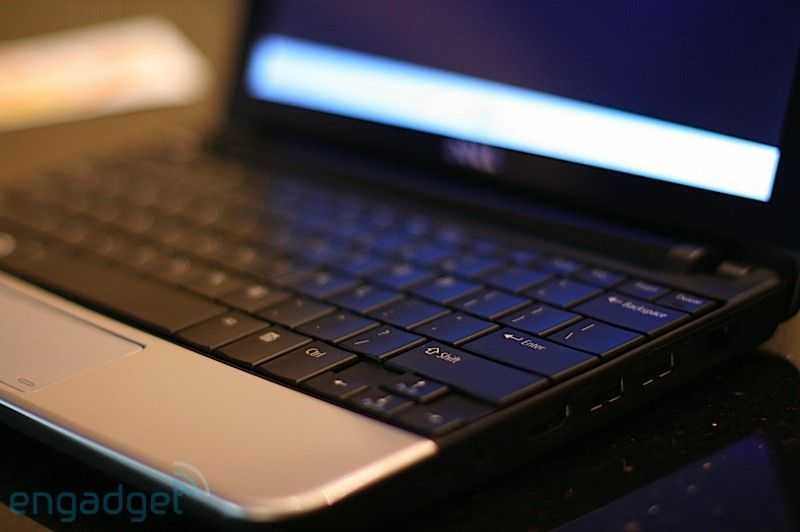
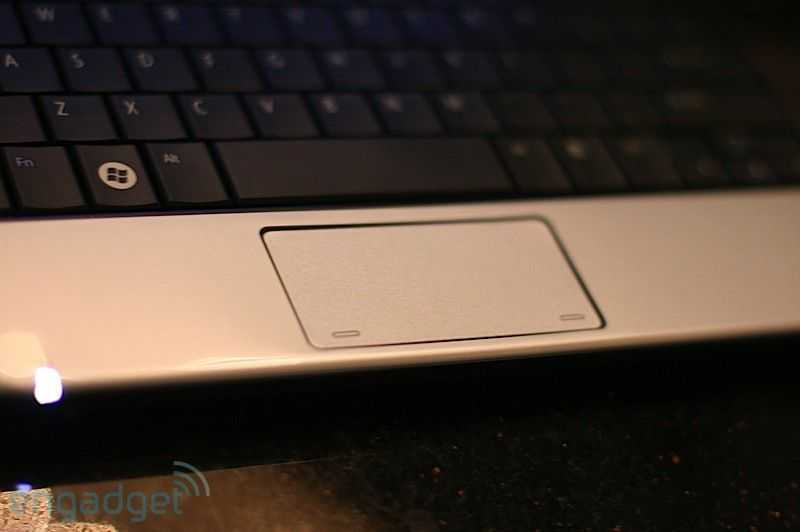
ABI: 11% View Netbooks as Primary Devices


ABI surveyed 1000 people about netbooks. According to their results, only 79% see them as a secondary computer. 11% see them as a primary computer proving that there is a significant overlap an direct impact on notebook sales. No surprise…

ABI surveyed 1000 people about netbooks. According to their results, only 79% see them as a secondary computer. 11% see them as a primary computer proving that there is a significant overlap an direct impact on notebook sales. No surprise really.


The results are not good news for laptop and netbook manufacturers in general, despite the 79% that are buying a netbooks as a second device. Here are some thoughts from the top of my head.


  • Any survey done at the moment is dealing with early-curve consumers that are highly likely to buy a second device. In one year the figures might be worse purely based on the change of customer type (although it will be hard to do this survey in the mainstream market as many consumers may not even know they’ve bought a netbook)

  • Even if people buy a netbook as a secondary device, it will change their purchasing rhythm pushing the purchase of a replacement notebook further out. In some cases the netbook may satisfy the customer 100% and the next notebook purchase may never happen.

  • As netbooks move to bigger screens, they pull prices of normal laptops down in order to compete on perceived value.


My feeling is that the netbook effect is going to hit manufacturers very hard in the next 3 years. Netbooks aren’t going away though so they will need to find a way to cope with it. This means stripping out niche products, reducing quality and implementing lots of tricky marketing.


More thoughts


ABI Research Survey: 79% of Respondents View Netbooks as “Secondary” Devices | Press Release | ABI Research.


2009年1月23日金曜日

Luuon Mobbit price. (Korea.) UMID launching soon there too.


News from Kevin Kang at CNet Asia.


Up from a previously announced price and a little more than I wanted to see is the $575, KRW 799,000, Korean price of the Lluon Mobbit UMPC.


Additional information I can give out those Korean…

News from Kevin Kang at CNet Asia.


Up from a previously announced price and a little more than I wanted to see is the $575, KRW 799,000, Korean price of the Lluon Mobbit UMPC.


Additional information I can give out those Korean MIDs, Viliv and UMID also about to launch their S5 and M1 within February here in Korea.


Some more info over at CNet but before you go there , tell us what you think of the price. 3G UMPC with XP for around $600. Good or bad?


TG Sambo MID Luuon Mobbit price is out! - CNET Asia Blogs: DigiHunter by Kevin (Kilmo) Kang, Korea.


2009年1月20日火曜日

Crunchpad comments.


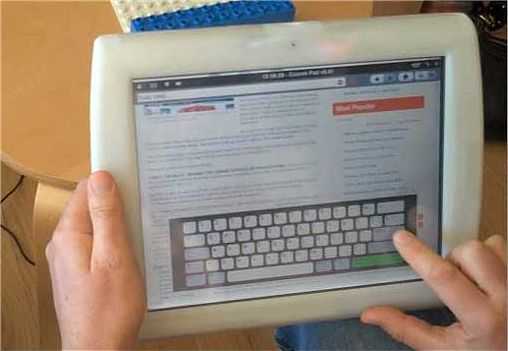
I can’t really let the day finish without mentioning the Techcrunch Crunchpad. Although it’s a relatively  big and non-mobile tablet, there’s a few things to mention.


Mike Arrington’s original focus for the design was web activities so it’s not suprising he’s gone for…

I can’t really let the day finish without mentioning the Techcrunch Crunchpad. Although it’s a relatively  big and non-mobile tablet, there’s a few things to mention.


Mike Arrington’s original focus for the design was web activities so it’s not suprising he’s gone for a PC-based solution. Web-based activities are getting to be some of the most CPU-intensive daily tasks that people do so a strong CPU is a must-have. The VIA Nano is, clock-for-clock, likely to be much more powerful than an Atom so a  good choice for processing power but with it’s relatively high thermal power rating, it’s going to need some cooling. That means fans and airflow space in the chassis. Not a good sign for bedtime browsers! Having said that, the low-end of the VIA Nano range at 1Ghz might be just right and I’m sure there’s scope for lowering it further if necessary. This would be a nice win for VIA if they can pull it off.


Why didn’t Techcrunch go for an ARM-based solution? It would allow for a much smaller and longer-battery life design. Maybe it’s because the high-end of ARM isn’t quite up to performing at the sort of levels that consumers expect? 5-10 seconds per web page load is probably just out of the reach of one of the latest ARM-based platforms.


The battery life is going to be a problem too. With a 4-cell, 2200mah-per-cell (a high-end, heavy-sounding  2p2s 7.2v) battery pack he’ll be looking at the  4-hour range with that huge screen. The backlighting budget will probably run to 5W and I’m sure that when you’ve added the relatively high-end CPU in and connected it to a Wifi hotspot, you’ll be draining 10-12 watts average. Possibly more when you’ve got flash content taking up CPU cycles. As many others have commented today, it might be better to settle with a 1024×600 8.9″ screen and maybe reduce the battery capacity to  save weight. It wouldn’t be perfect in portrait mode but landscape mode would be fine and you’d probably save 2W in backlighting and 300gm in weight. Overall though, you would probably lose battery life. It’s a tough balancing act.


Aesthetics play an important role but as we can all remember from ‘Origami’ in 2006, so do keyboards. I could write for hours about that but I’ll just say that if you need sales numbers, you’ll probably want to think carefully about the form factor and include,somehow, a  physical keyboard. The T91 or T101H from ASUS might bite Techcrunch in the bum unless they can get excelent on-screen keyboard software and some good early reviews about it.


All in all I think Techcrunch have set themselves tough targets for the device. While not impossible, I suspect it will be more expensive than planned, will have so-so battery life and could be a little too heavy for most people. They’ll need to convince an investor that they can sell hundreds and hundreds of thousands in order to hit the parts budget and that convertible netbooks or MIDs won’t be a threat.


Fingers crossed for Techcrunch though. I’m enjoying watching the project, am hoping it tends towards a 9″ device and I and wish Techcrunch and VIA every success with it.



2009年1月19日月曜日

Hilarious. Engadget hates/likes UMPCs!


Is it because it’s Sunday?


A few days ago Engadget posted a rather sarcastic item about the Loam F7. Actually it was spot-on from the consumer perspective because, quite frankly, it looks cheap. The hilarious part of the story comes when…

Is it because it’s Sunday?


A few days ago Engadget posted a rather sarcastic item about the Loam F7. Actually it was spot-on from the consumer perspective because, quite frankly, it looks cheap. The hilarious part of the story comes when they post about the Viliv X70, a device that has similar specs.


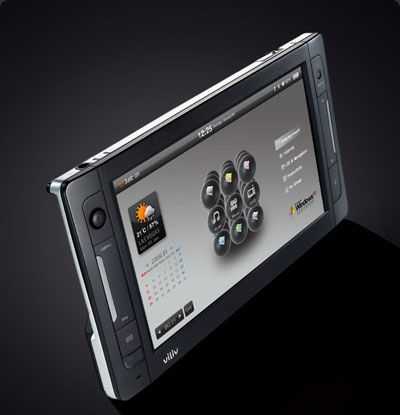
Maybe we’re just hot for sleek, thin, ultra sexy renders of handheld computing devices, but we dare anyone to call the unit pictured above unsightly (and mean it). Shortly after showcasing its swiveling S7 at CES, Viliv has taken the wraps off of its X70 Atom Communication MID.


Apart from the fact that we highlighted this nearly three weeks ago (our fault for not tipping them!) it seems that they’ve fallen in love with an Origami device. Check the specs at Gadgetmix.


  • Atom Silverthorne 1.33GHz processor

  • choice of SSD: 8GB/16GB or HDD: 30GB/60GB

  • Windows XP or Linux

  • 1GB RAM

  • optional WiMax module (mobile broadband)

  • Bluetooth 2.0+EDR and WiFi b/g (no ‘n’)

  • Weight: 660g

  • built-in GPS (Sirf Star 3)

  • SDHC slot

  • dimension: 210(w) x 117(h) x 22.5(d) mm


Apart from the 22.5mm depth, it’s nothing different.


Mickey-taking aside, it does prove that people are susceptable to a nice design, whatever it is. There’s always been a possibility that a UMPC or MID would berak through and this article from Engadget underscores that.


Viliv uncovers gorgeous X70 Atom Communication MID - Engadget.


Closing down PC and broadband for a week. Working as usual.


In a few hours, the MID Moves project officially gets into gear. Jenn is already on her way to California where she’ll be getting the ball rolling with her OQO 2+, Benq S6 and Willcom D4. Then, on Tuesday, i’ll be…

sims In a few hours, the MID Moves project officially gets into gear. Jenn is already on her way to California where she’ll be getting the ball rolling with her OQO 2+, Benq S6 and Willcom D4. Then, on Tuesday, i’ll be feeding in along with Nicole and Ewan.


As a little side project I’d thought I would close down not only my home PC and netbook but also my broadband Internet connection. Using the XP-based MIDs (some confusion there I know - Intel tends to put UMPCs under the MID banner) I don’t think there will be a problem at all. If that 1.86Ghz OQO 2+ turns up (fingers crossed for tomorrow) then I’ve got that wonderful docking station to use. I’ll just connect to a monitor, drop a 3G card in and use the device as my desktop for a week. I really don’t expect to report any issues at all with this set up although I’m sure I’ll notice the drop from the 32mb/s on my broadband down to around 1mb/s that I get here at home!


I’ll be testing in Germany on T-Mobile’s day flat service (on a contract) the same on a pre-paid T-Mobile card, day-flat ‘Web Session’ on a Vodafone pre-pay, Vodafone on a 200MB per month contract and the 2.50-per-day ‘flat’ service from Fonic.


Stay tuned here and on MID Moves for updates during the week. Feel free to ask questions too.


2009年1月17日土曜日

OQO Model 02+ First benchmarks.


The first of the MIDs are arriving at the doors of MID Moves doorsteps and one of the first to get attention is the OQO 2+ with it’s OLED screen and 1.8Ghz Atom CPU. Jenn has pushed out some benchmarks already…

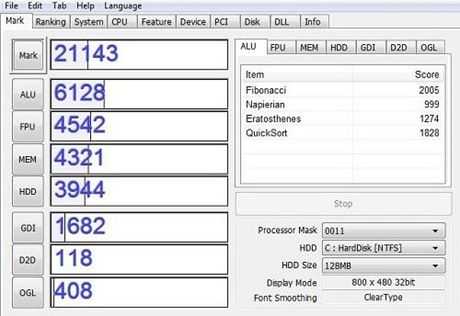
oqo2pluscm The first of the MIDs are arriving at the doors of MID Moves doorsteps and one of the first to get attention is the OQO 2+ with it’s OLED screen and 1.8Ghz Atom CPU. Jenn has pushed out some benchmarks already and you can instantly see the advantage over lower-clocked Atom CPUs. In fact, that ALU figure is higher than I expected. Disk results there look fairly average so I’m wondering if Jenn has the HDD version. Actually I’m hoping she has the HDD version!


As I type, Jenn is twittering [follow her mutterings] in the background so although it must be past her bedtime, I know she hasn’t been able to put it down yet!


Source: MID Moves


P.S. Jenn has the Benq S6 too. It’s the cheapest MID on the planet. Euro299!


Specifictions and details in the database: OQO 2 Plus. Benq S6.


Ultra Mobile Podcast 24


A great podcast (oops, even if I do say so myself!) covering the MID, UMPC and Netbook news from CES. A good roundup covering a lot of devices. Our raw show notes below…


Pegatron Netbook - Freescale. 8
VIA Nano. Dr…

A great podcast (oops, even if I do say so myself!) covering the MID, UMPC and Netbook news from CES. A good roundup covering a lot of devices. Our raw show notes below…


  • Pegatron Netbook - Freescale. 8

  • VIA Nano. Dr Mobile. 11.6″ and 8.9″

  • Vaio P

  • OQO 2+

  • Dell Mini 10. Silverthorne. Edge-to-edge. 1.2kilos

  • 1000 HDN Optical drive. Bluray. New CPU, new Chipset. Video-focused.

  • ASUS Eee PC T91 T101H Convertible.

  • HP 2140

  • Viliv S7, X70

  • UMID

  • MIO ‘MID’. ARM.

  • BYD Venus MID on the Intel stand. No details.

  • Aigo windows 7 + XP. Velocity. Maybe upgraded.

  • MSI U115


Download here, stream now via the player below or pick the podcast up via the RSS feed.


Subscribe to the Ultra Mobile Podcast RSS Feed


All podcasts are available and hosted at Mevio


2009年1月16日金曜日

Wibrain i1 and a Geo-Enabled Media Tour.


I took a walk to the horses this afternoon; a live media-walk for MIDMoves to test out some geographically-tagged capabilities on the big Web thing. Tracking is nothing new. Location-based tweets and near-live video posts are nothing new. Putting it all…

mediahorse


I took a walk to the horses this afternoon; a live media-walk for MIDMoves to test out some geographically-tagged capabilities on the big Web thing. Tracking is nothing new. Location-based tweets and near-live video posts are nothing new. Putting it all together in a media-rich way and being able to show it live is something different though. It highlights the difference between a smartphone and a PC-based MID or UMPC. There’s just no way you can tie all the components together and post-process it into a presentation like this with a smartphone. Having access to full-screen Web2.0 applications and smooth multi-tasking was the key here. There’s lots of improvements that can be made but this is a great step forward for live, media-rich tracking.


Move and zoom the map below and click on the icons for videos, audio recordings, tweets and images.